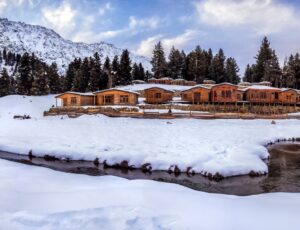
Kumrat Valley Overview
Kumrat Valley sits in the Upper Dir District of Khyber Pakhtunkhwa, tucked away in a part of Pakistan that most tourists fly past on their way to Swat or Kalam. That is exactly what makes it special. The valley runs along the Panjkora River, flanked by dense Deodar forests, snow-capped peaks, and wide green meadows that look almost too perfect to be real. It is not the easiest place to reach. The road is rough, the last stretch requires a proper 4×4, and the drive from Islamabad alone takes close to nine hours. But the moment you enter the valley and the forest closes around you, every uncomfortable kilometer disappears from memory. Kumrat rewards effort, and it rewards it generously. Unlike Swat or Naran, Kumrat has not been overrun by mass tourism yet.
Quick Facts Kumrat Valley
| Detail | Info |
| Location | Upper Dir District, Khyber Pakhtunkhwa |
| Altitude | 6,600 to 9,000+ feet above sea level |
| River | Panjkora River |
| Best Season | June to September |
| Road Condition | Unpaved — 4×4 vehicle recommended |
| Distance from Islamabad | ~369 km — 8.5 to 9 hours |
| Distance from Peshawar | ~190 km — 3 to 4 hours |
| Distance from Swat (Mingora) | ~156 km — 6 hours |
| Distance from Kalam | ~63 km — 3 hours |
| Nearest Town | Thal, Upper Dir |
Is Kumrat Valley Worth Visiting?
Yes, without hesitation. Kumrat Valley is one of those rare places in Pakistan where the reality actually matches the photos you have seen online, which is not always the case with popular destinations. The combination of Jahaz Banda meadows, Katora Lake, the Panjkora River rushing through the forest, and Deodar trees so tall they block out the sky creates an experience that is genuinely hard to find elsewhere. If you have already done Swat and Naran, Kumrat is the logical next step, more raw, more peaceful, and honestly more rewarding.
Kumrat Valley Location

Kumrat Valley is located in the Upper Dir District of Khyber Pakhtunkhwa, roughly at coordinates 35°32′ N and 72°13′ E. The nearest town is Thal, which sits on the banks of the Panjkora River about 45 minutes by car from the valley entrance. The valley borders the Swat District on one side and shares mountain ranges with Dir Kohistan. It is part of the larger Hindu Kush range, which explains the dramatic elevation changes and the sheer scale of the scenery throughout the valley.
Key Attractions of Kumrat Valley
Kumrat Town Centre Thal
Thal is the main town serving as the base for Kumrat Valley and your last proper stop before entering the valley. It sits on the banks of the Panjkora River and has basic shops, fuel, and food available. Most travellers stock up on supplies here before heading deeper into the valley. The town itself is small but lively, and the local market gives you a genuine taste of Upper Dir culture before the mountains take over completely.
Jahaz Banda Meadow
Jahaz Banda is the crown jewel of Kumrat Valley — a vast alpine meadow sitting at 3,100 meters above sea level, surrounded by snow-capped peaks on three sides and dense forest on the fourth. The name means ‘airplane field,’ and standing in the middle of it, you understand why. It is enormous, flat, impossibly green in summer, and completely silent except for the wind. The Jahaz Banda Waterfall adds to the drama, tumbling down the hillside at the edge of the meadow. This is the place in Kumrat that stays with you long after you have come back home.
Katora Lake
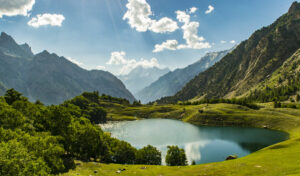
The Katora Lake is a high-altitude glacial lake shaped like a bowl. ‘Katora’ means bowl in Urdu, and the name is accurate. The water is ice cold and an impossible shade of blue-green that changes with the light throughout the day. The hike up to Katora Lake from Jahaz Banda takes about two to three hours and involves some steep sections, but the views from the lake itself make every step worthwhile. Trout fishing is possible here, and on clear days, the reflections of the surrounding peaks in the still water are genuinely breathtaking.
Panjkora River
The Panjkora River is the lifeline of Kumrat Valley. It flows through the entire length of the valley at an elevation of around 3,600 meters and runs approximately 220 km through the Dir District and into Kumrat. The road to Kumrat follows the river for most of the journey, making the drive itself scenic from the moment you leave Chakdara. The river is fast, cold, and crystal clear. White-water rafting on the Panjkora is one of the most exciting activities in the valley, particularly during summer when snowmelt swells the current. Even if you skip the rafting, sitting by the riverbank at dusk with the sound of the water rushing through the forest is worth the journey alone.
Kumrat Waterfall
The Kumrat Waterfall drops between 100 and 200 meters down a rocky cliff face, and the pool it forms at the base is cold enough to be genuinely refreshing in summer heat. The trail to reach it is short and manageable. The path from the main road is fairly straightforward and takes about 20 to 30 minutes on foot. The surrounding forest adds to the atmosphere, and the mist from the waterfall keeps the area cool even in July.
Kumrat Forest
The Deodar forests of Kumrat are some of the most impressive in KPK. These are ancient trees, tall, straight, and dense enough that sunlight comes through in scattered beams rather than full light. The forest floor is covered in wildflowers in summer, and the hiking trails through the forest lead to clearings, waterfalls, and viewpoints that most visitors never find because they stay near the main road. If you are spending more than one day in Kumrat, explore the forest trails — they are the quietest and most rewarding part of the valley.
Do Kala Chasma
Do Kala Chasma is a natural spring in the valley with exceptionally clear, cold water. The locals have considered it to have medicinal properties for generations, and whether or not that is true, drinking from it on a hot day feels like one of the better decisions you will make on the trip.
Kumrat Valley National Park
The surrounding area is protected as a national park, home to the Himalayan brown bear, Marco Polo sheep, snow leopard, and a wide variety of bird species. Wildlife sightings are rare but not unheard of — the bears are occasionally spotted in the higher elevations early in the morning or at dusk.
Kumrat Valley Weather
| Season | Temperature & Conditions |
| Summer (June–August) | 20–28°C days, 10–15°C nights — ideal |
| Monsoon (July–August) | Occasional rain, lush green, muddy roads |
| Autumn (September–October) | Cool and clear, stunning colours |
| Winter (November–March) | Heavy snowfall, the road is often closed |
| Spring (April–May) | Melting snow, roads reopening, cold nights |
Summer is the undisputed best season — the meadows are green, the river is full, rafting is possible, and the weather is comfortable enough for both hiking and camping. Autumn is beautiful for the colours, but the nights get cold fast. Winter closes the road entirely in most years.
Best Time to Visit Kumrat Valley

June to September is the sweet spot. The valley is fully accessible, Jahaz Banda is at its greenest, and the Panjkora River is running strong enough for rafting. July and August bring occasional rain, which makes the roads muddier but the scenery dramatically more beautiful — the entire valley turns an intense green that photographs cannot do justice to.
How to Get to Kumrat Valley
There is no single direct route — the approach depends on where you are coming from. All routes converge at Thal in Upper Dir, from where the valley is about 45 minutes by 4×4.
Important: The last section of the road to Kumrat Valley is unpaved and rocky. A 4×4 vehicle is strongly recommended. Sedans and small hatchbacks have been known to make it, but it is not advisable, especially after rain. If you are already in Swat or Kalam, the Kalam to Kumrat route at 63 km is the most scenic and shortest — it winds through mountain roads with river views the entire way and takes about 3 hours due to road conditions.
Kumrat Valley Road Conditions
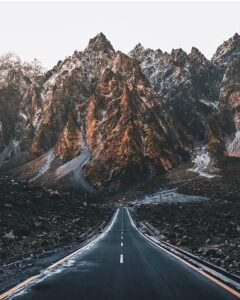
The road to Kumrat Valley is one of the most discussed topics among Pakistani travellers, and for good reason. The main road from Thal into the valley is unpaved, narrow in sections, and runs alongside the Panjkora River, which means during high water season, parts of it can be tricky. A proper 4×4 SUV Prado, Fortuner, Surf, or similar is the right vehicle for this trip. If you are renting locally from Islamabad or Peshawar, confirm the vehicle before you book. Many travellers hire local jeeps from Thal for the final stretch into the valley, which is worth considering if your own vehicle is not built for it. Road conditions can change quickly after heavy rain. Always check with locals or recent travellers before heading. Facebook travel groups for KPK tourism are the most reliable real-time source for road updates.
Kumrat Valley Hotels & Accommodation
Accommodation in Kumrat Valley ranges from basic guesthouses to surprisingly comfortable resorts. Options have improved significantly in recent years as tourism has grown. Here are the main choices:
| Hotel / Resort | Type & Notes |
| Valhalla Resort Kumrat | Glamping tents, a unique experience, check current availability |
| Panjkora Hotel & Resort | Riverside huts and rooms, 24/7 restaurant, Wi-Fi |
| Kumrat Glamping Resorts | Mid-range, family-friendly |
| Kumrat Maskan Hotel | Budget option, basic but clean |
| Mom Touch Hotel | Mid-range, family friendly |
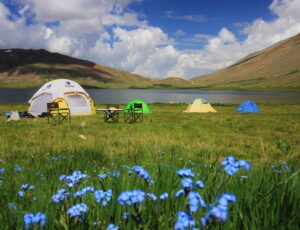
Prices vary significantly by season; peak summer rates are higher than shoulder season. Always confirm current rates directly with the hotel before visiting, as prices change year to year. Booking in advance for July and August is strongly recommended as the valley fills up quickly during peak season. Camping is also popular in Kumrat, particularly near Jahaz Banda meadow. If you are bringing your own tent, the meadow itself is one of the best camping spots in KPK, just be prepared for cold nights even in summer.
My Personal Experience at Kumrat Valley

The drive to Kumrat is an experience in itself. You spend hours on a smooth motorway, then gradually the roads narrow, the towns thin out, and somewhere past Thal the asphalt disappears entirely. By the time you reach the valley entrance, you are already in a completely different world. The first thing that hits you is the silence. Not the absence of sound, the Panjkora River is loud, but the absence of city noise: no horns, no traffic, no construction. Just water, wind, and the occasional call of a bird you cannot identify. Jahaz Banda meadow was the moment I understood what people meant when they said Kumrat was different. You walk out of the tree line, and suddenly there is this enormous open space surrounded by mountains on every side, empty except for a few local shepherds and their livestock in the distance. It feels ancient and untouched in a way that very few places still do.
Essential Tips for Visiting Kumrat Valley
- 4×4 vehicle is not optional — the road demands it
- Carry cash — ATMs are not available in the valley
- Pack warm clothes even in summer — nights drop sharply
- Check road conditions before departing — especially after rain
- Book accommodation in advance for July and August
- Carry extra fuel — petrol stations are limited past Dir
- Hire a local guide for the Katora Lake hike — trail forks in places
- Start the Katora Lake hike early — afternoon clouds reduce visibility
- Respect the forest — no littering, no open fires near trees
Nearby Places to Visit
| Place | Distance from Kumrat |
| Kalam Valley | ~63 km — 3 hours |
| Ushu Forest | ~75 km — 3.5 hours |
| Swat (Mingora) | ~156 km — 6 hours |
| Malam Jabba | ~277 km — 5 hours |
| Dir Town | ~90 km — 2.5 hours |
Kumrat Valley Distance from All Major Cities
| From | Distance & Estimated Time |
| Islamabad / Rawalpindi | ~369 km — 8.5 to 9 hours via AH1/M-1 |
| Peshawar | ~190 km — 3 to 4 hours via AH1/M-1 |
| Lahore | ~714 km — 12 to 13 hours via M-2 |
| Faisalabad | ~620 km — 11 to 12 hours via M-2 then M-1 |
| Multan | ~780 km — 13 to 14 hours via M-5 then M-1 |
| Karachi | ~1,414 km — 16 to 17 hours via M-5 |
| Swat (Mingora) | ~156 km — 6 hours via N-95 |
| Kalam | ~63 km — 3 hours (shortest route) |
| Chakdara | ~175 km — 5.5 to 6 hours via N-45 |
| Malam Jabba | ~277 km — 4.5 to 5 hours via M-16 |
| Chitral | ~180 km — 5 to 6 hours via mountain roads |
Islamabad to Kumrat Valley Bus Service
The route from Islamabad follows M1 to Chakdara, then N45 through Timergara (Dir). From Chakdara, the journey splits into two parts. The first part — Chakdara to Baabe-e-Kumrat at Chutiatan is approximately 100 km on N45 and takes around 3 hours. You pass through Timergara, Barron, Toormang Wari, Shib Abad, and Darora before reaching the valley entrance at Chutiatan. The second part, from Chutiatan to Kumrat, is the off-road section of about 78 km, taking another 3.5 to 4 hours. The key towns on this stretch are Sheringal, Biar, and Thal. This is where the road gets rough, and the 4×4 becomes essential.
Kumrat Valley Tour Packages
Several travel operators in Islamabad, Lahore, and Peshawar offer Kumrat Valley tour packages, typically covering 3 to 5 days. A standard package includes private 4×4 transport, accommodation, and a guide. Prices vary significantly between operators; always confirm what is included before booking. Key things to check when booking a package: is the vehicle a genuine 4×4, does the accommodation include meals, and is the guide local or just a driver? Local guides who know Jahaz Banda and the Katora Lake trail make a real difference to the experience.
3-Day Tour to Kumrat Valley
| Day | Plan |
| Day 1 — Drive In | Early start → Jahaz Banda Meadow (3,100m) → hike to Katora Lake. Return to the valley by evening. Optional: drive back toward Islamabad or overnight again. |
| Day 2 — Valley Exploration | Morning: Kumrat Waterfall + Kumrat Forest trails. Afternoon: Panjkora River rafting or fishing. Evening: bonfire at camp. |
| Day 3 — Jahaz Banda + Katora Lake | Early start → Jahaz Banda Meadow (3,100m) → hike to Katora Lake. Return to valley by evening. Optional: drive back toward Islamabad or overnight again. |
Day 3 is the most demanding. Start the Jahaz Banda drive by 7 AM and begin the Katora Lake hike no later than 9 AM to ensure you are back before afternoon clouds roll in. The hike takes 2 to 3 hours each way, depending on fitness level.
Badgoi Pass Kumrat Valley
Badgoi Pass is one of the more adventurous routes accessible from Kumrat Valley, connecting the valley to Kalam and Swat through high mountain terrain. The pass sits at a significant altitude and is only accessible in summer when snow has cleared, typically July through September. The route over Badgoi Pass is not for casual travellers; it requires a good 4×4, experience with mountain driving, and ideally a local guide who knows the track. But for those who attempt it, the views from the pass and the sense of crossing from one valley system into another through entirely roadless mountain landscape is an experience that very few people in Pakistan have had. Worth researching further if you are planning an extended KPK mountain trip.
Kumrat Valley Snowfall
Kumrat Valley receives heavy snowfall from November through March, and in some years, snow lingers into April or even May at higher elevations. Jahaz Banda and Katora Lake remain snowbound well into June in heavy snowfall years. The snowfall itself is beautiful, the Deodar forests under snow are genuinely spectacular, but the practical reality is that the main road into the valley becomes impassable. Do not attempt a winter visit without confirmed local information that the road is open. Several travellers have been stranded in or near Thal because they assumed the road would be accessible. If you specifically want to see Kumrat in snow, late October or early November offers the best combination of accessible roads and fresh snowfall on the higher peaks. In addition, the valley floor is still reachable while the mountains above are white.
Kumrat Valley Camping
Camping in Kumrat Valley is one of the best outdoor experiences in KPK. The main camping spots are near the Panjkora River at the valley floor and at Jahaz Banda meadow for high-altitude camping. Jahaz Banda camping is the more memorable option, waking up at 3,100 meters with the meadow empty, the peaks visible in the early morning light, and absolute silence is the kind of experience that stays with you. However, nights at Jahaz Banda are genuinely cold even in July and August, when temperatures can drop below 5°C. A sleeping bag rated for 0°C minimum is essential, not optional.
Kumrat Valley Weather Live Forecast
Kumrat Valley weather changes quickly due to its mountain location and altitude. For 10-day forecasts and today’s weather in Kumrat Valley, the most reliable sources are Windy.com (best for mountain weather) and AccuWeather. Search ‘Kumrat Valley weather’ or use the coordinates 35.52°N 72.22°E for the most accurate local forecast.
Kumrat Valley and Tourism Growth
Kumrat Valley gained significant national attention when former Prime Minister Imran Khan visited the valley and highlighted it as part of broader efforts to promote domestic tourism in KPK. The visit brought considerable media coverage and introduced many Pakistanis to a destination they had never heard of before. Since then, tourist numbers have grown steadily, accommodation options have improved, and the valley has become a more recognised name on Pakistan’s travel circuit, though it still retains much of its original quiet character compared to Swat or Naran.
Kumrat Valley Map
Kumrat Valley Pictures

FAQs
Yes, Kumrat Valley is safe for tourists. The local population in Upper Dir is known for hospitality toward visitors. As with any remote mountain destination, take standard precautions, travel in groups if possible, inform someone of your itinerary, and check local advisories before travel.
Take AH1/M-1 toward Peshawar, then head north via Dir Road/N-45 through Chakdara and Dir Town to Thal. From Thal, take the valley road into Kumrat. The total journey is approximately 369 km and takes 8.5 to 9 hours, depending on road conditions and stops.
Minimum two nights, ideally three. One day is not enough to experience Jahaz Banda and Katora Lake properly. Two nights give you a day for the valley and a full day for the high-altitude attractions. Three nights is ideal if you want to hike, raft, and explore without rushing.
Coverage is limited and unreliable. Some providers have a weak signal in parts of the valley, but do not rely on connectivity for navigation or communication. Download offline maps before you go and inform your family of your itinerary before entering the valley.
Not recommended. Heavy snowfall typically closes the road from November through May. Some years, the road opens as late as early June. Always confirm with locals or recent travellers before planning a winter or early spring visit.